
After decades underground, the original sewer line beneath an older home may have taken years of damage. Corrosion, cracks, leaking joints, and sagging can slowly wear the pipe down until it no longer works properly. That is why older homes often need professional sewer pipe replacement services. This refers to the sewer line that carries wastewater away from the home, not the pipes that bring in clean water. Age alone does not mean a pipe needs replacing. Many older homes already have newer sewer lines, so the pipe’s actual condition matters more than the home’s age.
1. Old Pipe Materials Wear Differently
The material beneath the yard affects how a sewer line ages. Different pipes have different weaknesses, and each can develop problems over time.
Clay Pipe Cracks and Failing Joints
Vitrified clay was widely used for decades because it resists chemical corrosion. However, clay pipes are rigid and can crack or shift as the ground moves. Their joints can also separate over time, allowing wastewater to leak into the soil and tree roots to enter. Not every old clay pipe is damaged. Many last 50 to 60 years, although their joints are often the first parts to fail.
Cast-Iron Corrosion From Within
Cast iron was the standard in many homes built before the 1970s, prized for its strength. The weakness is internal corrosion, since the pipe rusts and scales from the inside out over the decades. A cast-iron waste pipe (below ground) has an estimated service life of 50 to 60 years. As the walls thin and flake, the damage reaches well past a simple blockage you can clear, into the structure of the pipe itself.
Orangeburg Deformation and Collapse
Some homes built between the 1940s and 1970s have Orangeburg pipes made from wood fibers held together with tar. Over time, these pipes absorb moisture and lose their shape. The weight of the surrounding soil can flatten them, leaving less room for wastewater to flow. When an Orangeburg pipe becomes badly deformed or collapses, cleaning is no longer enough, and replacement is usually necessary.
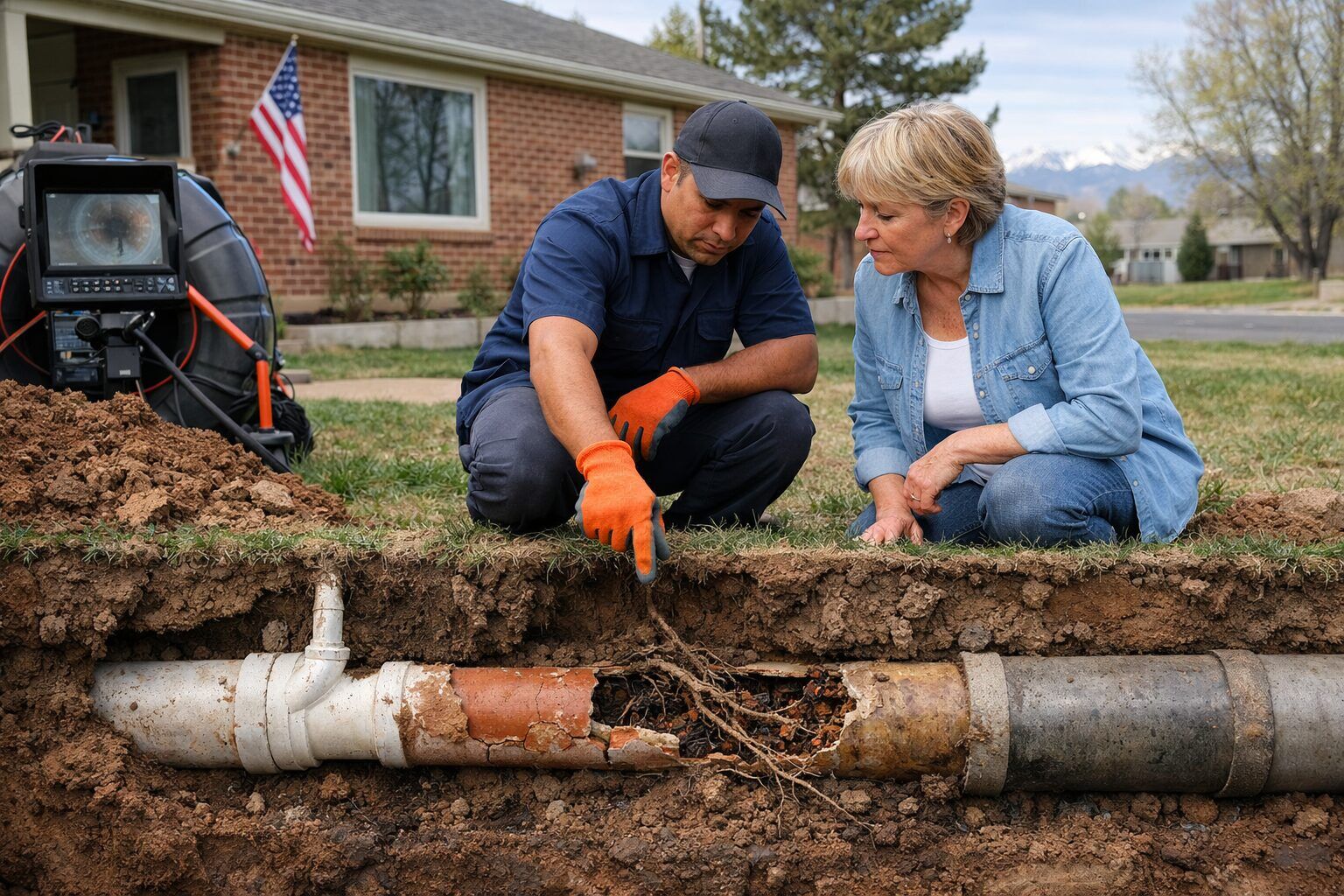
Knowing what lies beneath your yard helps you make the right decision. Experts like BFMD Plumbing start by sending a camera through the sewer line to identify the pipe material and spot any damage. This helps their team see the pipe’s actual condition and recommend the work it needs instead of relying on guesswork.
2. Corrosion Weakens Pipes Over Time
Corrosion can slowly damage older metal sewer lines until cleaning no longer solves the problem.
Inside an aging cast-iron pipe, rust and mineral deposits build up along the walls. This makes the surface rough and reduces the space available for wastewater to pass through. Grease, paper, and other debris then catch on the buildup, causing blockages that return even after repeated cleaning. As the damage worsens, the pipe may reach a point where replacement is the better solution:
- A plumber can sometimes remove loose scale and restore some flow for a time.
- Trouble comes when corrosion eats through the pipe wall itself, since cleaning cannot replace metal that has already rusted away.
- At that stage, the pipe is missing material, and only new pipe truly fixes the problem.
3. Aging Joints Let Tree Roots In
Tree roots and aging sewer pipes are a common problem. Cracks and loose joints give roots a way into the line.
Root Entry Through Cracks and Joints
Roots naturally grow toward water and nutrients, making a leaking sewer pipe an easy target. Older concrete and clay sewer pipes with loose or non-watertight joints are especially vulnerable. Once small roots enter through a crack or joint, they can grow into thick masses that trap waste and cause repeated blockages.
Root Removal vs. Permanent Fix
Cutting the roots out often restores flow, yet it rarely solves the real problem:
- Root cutting clears the mass without fixing the crack or joint that let them in, which means the roots simply return.
- Replacement enters the picture when a camera shows the damage is widespread.
- Root intrusion at a single spot does not prove the whole line is finished.
4. Ground Movement Cracks Old Pipes
The soil around a sewer line can shift over time. This movement may pull joints apart or push sections of pipe out of place.
Several forces shift the soil around buried pipe over the years:
- Settling ground as loose fill compacts beneath the line.
- Erosion that washes soil away and leaves pipe unsupported.
- Expansive clay soil that swells and shrinks with moisture.
- Freeze-and-thaw cycles in colder regions.
Ground movement can separate joints, crack pipes, or leave the line misaligned. Older materials such as clay and Orangeburg are particularly vulnerable because their rigid sections cannot adjust easily to shifting soil. However, ground conditions differ from one property to another, so the risk depends on the soil and conditions around the home.
5. Sagging Lines Trap Waste and Clog
Sagging sewer lines cause problems that cleaning alone cannot fix. When part of the pipe dips, waste can collect there instead of flowing away.
Plumbers call this low section a “belly.” It forms when part of the sewer line sinks below the surrounding sections, often because the ground settles over time. Wastewater and solids collect in the dip, leading to repeated clogs in the same spot. Clearing the blockage may restore flow temporarily, but it does not correct the pipe’s position. Fixing a true belly usually requires realigning or replacing the affected section.
6. Widespread Damage Outpaces Repairs
One damaged section may only need a repair. When several parts of an aging sewer line start failing, the solution may be more involved.
One Defect vs. Many Failing Sections
A single crack or misaligned joint can often be fixed with a spot repair. However, when a camera inspection reveals damage across much of the pipe, fixing one section may not solve the problem. Other weak spots can continue to cause leaks and backups. In some cases, the damage is too severe for a simple repair:
- Fully collapsed sections.
- Severe deformation, as with flattened Orangeburg.
- Major misalignment or separated joints throughout.
Findings That Rule Out Lining
Some types of damage can also make trenchless lining unsuitable because the existing pipe must be strong enough to support the liner. In these situations, full sewer pipe replacement services may be a better long-term option. If most of the pipe remains in good condition, trenchless lining or a partial repair may still work.
How an Inspection Confirms the Need
Slow drains and repeated sewer backups can point to a damaged pipe, but they don’t automatically mean the entire line needs replacing. A sewer camera inspection helps identify the cause and determine how serious the damage is.
During the inspection, a plumber guides a waterproof camera through the sewer line to check for:
- Cracks and separated joints that allow leaks or tree roots to enter.
- Corrosion and pipe deterioration that weaken the pipe walls.
- Standing water and sagging sections where wastewater collects.
- Severe deformation or collapse that restricts or blocks the flow of waste.
Once the inspection reveals the extent of the damage, the plumber can recommend the appropriate solution. A localised crack or minor defect may only need a spot repair, while widespread deterioration or a collapsed section may call for replacement. The decision should be based on the pipe’s actual condition, not simply the age of the home.
Important FAQs
Can you repair a sewer line instead of replacing it?
Often, yes. A single crack, one misaligned joint, or minor root intrusion may be suitable for a spot repair or trenchless lining. Widespread corrosion, a collapsed pipe, or a sagging section may require replacement. A camera inspection helps determine which option makes the most sense.
How much does sewer line replacement usually cost?
The cost depends on the pipe’s length, depth, and replacement method. Trenchless methods may cost more per foot upfront but can reduce the expense of digging and restoring the yard. Full excavation and replacement can cost thousands of dollars, so an accurate estimate requires an inspection.
Conclusion
Older homes often have sewer lines that have spent decades dealing with corrosion, tree roots, shifting soil, and sagging sections. Over time, this damage can become too severe for a simple repair, making sewer pipe replacement services the better option. However, age alone does not tell you whether a pipe needs replacing. A camera inspection reveals its actual condition and helps determine whether a repair will work or a full replacement is necessary.
Old sewer pipes can fail without much warning, often when you least expect it. BFMD Plumbing handles sewer problems across the Baltimore metro area, from camera inspections to complete pipe replacement. Their team manages the excavation, installation, and cleanup to keep disruption to your yard as low as possible.
If your drains keep backing up and previous repairs have not solved the problem, call them and get your sewer line back in working order.
Read More: What Should You Know Before Choosing A Water Meter Installation Service