A room can have expensive furniture, perfect paint, and still feel flat. The missing piece is usually not money. It is judgment. When you learn how to style interior spaces with intention, even an ordinary room starts to feel settled, personal, and quietly impressive.
That matters more than people admit. Most homes are not design-show houses with endless square footage and custom finishes. They are busy, lived-in places where shoes pile up, cables sneak into corners, and one bad lamp can ruin the mood by 7 p.m. I have seen tiny apartments feel richer than large houses simply because someone knew where to place a chair, when to stop adding decor, and how to let a room breathe. Elegance is not fluff. It is discipline with warmth. This is where real comfort meets good taste, and where small choices create lasting visual calm. You do not need a mansion or a massive budget. You need a sharper eye, a little restraint, and a plan that respects how you actually live.
Start With Structure Before You Add Beauty
A room earns its grace long before you place the final vase on a shelf. The bones come first: layout, movement, balance, and proportion. When those pieces work, decoration feels natural instead of noisy. I have walked into rooms with beautiful objects that still felt stressful because the path through the space was awkward and the furniture looked like strangers at a bus stop. Elegance begins when the room knows what it is doing. That means the sofa faces the real focal point, the rug is large enough to ground the seating, and every major piece feels like it belongs to the same conversation. Get the structure right and the room stops fighting you.
Build Around the Way You Actually Live
Your daily habits should shape the room before your wishlist does. If you drink coffee by the window every morning, that corner deserves your best chair, not a decorative stool that looks smart and feels miserable after ten minutes. A stylish room that ignores real life always loses.
I learned this the hard way in a narrow living room where I kept trying to force a dramatic layout I saw in a glossy magazine. It looked polished in photos, but people had to sidestep a side table just to sit down. Once I turned the seating inward, widened the walkway, and moved the lamp where reading actually happened, the whole place relaxed.
Function is not the enemy of beauty. It is the reason beauty lasts. When you arrange a room around the rhythm of your day, elegance feels convincing because it supports your life instead of interrupting it. That is the difference between a room you admire and a room you keep returning to.
Give Every Large Piece Enough Breathing Room
Crowding kills refinement faster than almost anything else. A room packed wall to wall with furniture rarely feels generous, even if every piece is attractive on its own. Space is part of the design. Empty areas are not wasted. They are what make the room legible.
One of the best fixes for a tired room costs nothing: remove one thing. Maybe it is the extra armchair no one uses, the nesting table that collects clutter, or the shelf unit that blocks light. Strip back a little and the good pieces finally get to speak. You notice shape, texture, and scale more clearly.
This is where many people get timid. They worry the room will look bare. It usually will not. It will look edited. That is better. When larger items have room around them, the whole space feels calmer and more expensive, even if half the furniture came from a clearance aisle and the coffee table has survived three moves.
Choose a Palette That Feels Calm, Not Lifeless
Once the layout works, color starts doing heavy lifting. This is where many rooms either click or collapse. People hear the word elegant and race toward beige everything, then wonder why the space feels like a waiting room with throw pillows. Calm is good. Boring is not.
A thoughtful palette does more than make a room look tidy. It controls energy, flatters natural light, and helps separate what matters from what does not. Whether your style leans classic, modern, or somewhere in that messy middle, color should create continuity. It should not beg for attention in every corner. Restraint wins here, but so does personality. A room with no pulse is just a showroom pretending to be a home.
Work With a Tight Base and a Few Smart Contrasts
The easiest way to bring order to a room is to narrow the base palette. Pick two or three anchor tones that can carry the larger surfaces: walls, rugs, upholstery, curtains, and main storage pieces. That creates a visual floor under everything else. It also saves you from buying random decor that matches nothing except your mood on a Tuesday.
In one apartment I helped restyle, the breakthrough came when we stopped chasing “interesting” colors and settled on warm white, soft clay, and weathered wood. Then we layered in black metal, olive accents, and one deep rust chair. The room suddenly had shape. It did not feel loud. It felt decided.
Contrast is what keeps a controlled palette from going sleepy. The trick is to place it with confidence, not scatter it like confetti. One dark frame wall, one strong lamp base, one crisp charcoal cushion group. That is often enough. The room wakes up without starting a fight.
Let Materials Carry Part of the Color Story
Texture can do the work that people often ask color to do. That matters because texture adds depth without turning the room into a patchwork of competing shades. Linen, brushed wood, boucle, stone, jute, and matte ceramics each bring variation that feels grounded rather than busy.
This is also the moment to think beyond paint chips. A pale room with flat materials can feel limp, while a restrained room rich in texture feels layered and alive. A sand-colored sofa becomes far more interesting beside a ribbed oak table, a slubby curtain, and a hand-thrown lamp with an imperfect glaze. That kind of detail reads human.
You can push this even further in a way that still honors style interior spaces as a real, livable practice, not just a photo exercise. Try mixing one refined finish with one rougher note in each zone. Polished stone beside woven grass. Soft velvet next to dry timber. The contrast adds character without wrecking the calm.
Layer Light and Texture Like You Mean It
A room with weak lighting will never feel elegant, no matter how carefully you decorate it. Harsh overhead glare flattens color, punishes texture, and makes every corner feel exposed. Soft, layered light does the opposite. It gives a room shape, mood, and grace after sunset, which is when many homes reveal their true character.
Texture works the same magic in daylight. It softens hard lines, catches shadows, and keeps minimal rooms from feeling sterile. Together, light and texture create atmosphere. And atmosphere is the part people remember. They may not recall your exact rug pattern, but they will remember how the room made them feel when they sat down and exhaled.
Use Three Levels of Light, Not One Sad Ceiling Fixture
Most rooms need at least three forms of light: ambient, task, and accent. The ceiling light handles general visibility, but it should never be doing the whole job alone. Add a floor lamp for depth, a table lamp for intimacy, and a smaller glow source near a shelf, art piece, or reading chair.
I once visited a dining room that looked forgettable by day and stunning at night. The secret was not the furniture. It was the lighting plan. A dimmable pendant set the scene, two wall lights softened the edges, and a small lamp on a sideboard made the entire room feel inhabited. Same room. Different mood. Massive difference.
This does not require fancy wiring. Plug-in sconces, rechargeable picture lights, and well-placed lamps can change everything. The goal is to avoid lighting that feels flat and obvious. You want gentle pools of light that guide the eye and make faces look kind. That is elegance doing practical work.
Bring Warmth Through Surfaces You Can See and Feel
Texture lands best when it is distributed, not piled. You do not need ten throws to prove a room is cozy. You need a few honest surfaces that invite touch and soften the hard architecture most rooms already have. Think curtains that puddle slightly, a wool rug with real body, or a bench cushion that does not look like an afterthought.
A good test is simple: scan the room and ask whether every visible surface feels equally hard. If the answer is yes, the room probably feels colder than you think. Walls, glass, metal, and smooth wood all need some softer company. That can come from fabric, basketry, paper shades, or even the right stack of books with worn jackets.
One sharp move is to add texture in places people overlook. A pleated shade on a lamp. A stitched trim on a pillow. A rough ceramic bowl on a clean console. Small details like that do not scream for credit, but they deepen the room. Quietly. Sometimes that is the whole point.
Edit the Details So the Room Feels Collected
This is the stage people rush, and it shows. They handle the big pieces well, then clutter every available surface with filler decor from a weekend shopping spree. Elegance hates filler. A room feels collected when the details seem earned, not purchased in bulk.
The final layer should tell the truth about who lives there. Not every truth, obviously. No one needs your mail pile as a design statement. But the objects should feel specific. A framed sketch from a trip, a heavy bowl inherited from family, or a stack of books you have actually read will always beat a tray of generic beads pretending to be meaningful.
Style Surfaces With Tension, Not Symmetry Addiction
Perfect symmetry can look tidy, but too much of it makes a room feel stiff. Real elegance usually comes from controlled imbalance. That means a tall lamp paired with a lower stack of books, or a sculptural vase offset by a horizontal frame. The eye enjoys a little tension. It keeps the room alive.
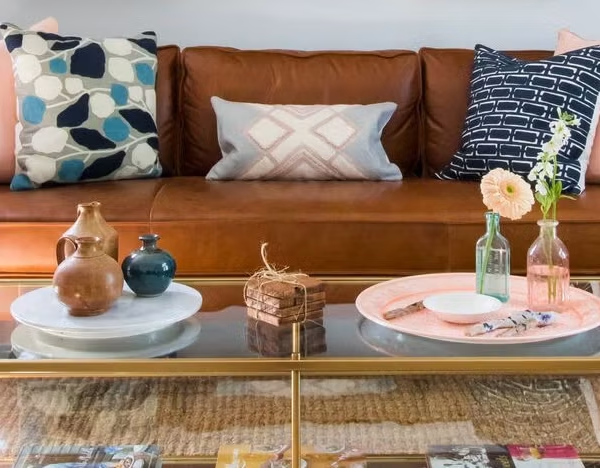
Coffee tables are the classic trap. People either leave them empty out of fear or overload them with candles, coasters, flowers, books, and some random object shaped like coral. Try a tighter mix instead: one tray, one organic element, one reading item, and one breathing space. Done. The table looks thoughtful, not staged for a catalog.
Shelves need the same discipline. Group items by visual weight, not by category alone. Mix vertical and horizontal shapes. Leave gaps. Let one piece stand alone if it deserves it. A shelf packed edge to edge looks anxious. A shelf with intention looks like someone with taste lives there and knows when to stop.
Make Personality Visible Without Letting Clutter Take Over
Personal rooms feel better than perfect ones. I will stand by that. The trick is to show identity through selection rather than accumulation. You do not need to display everything you love. You need to display the things that sharpen the story of the room.
This is a smart place to bring in a few connected references that support your wider decorating taste. A short list of home styling ideas and design stories can spark direction without turning your space into a copy of someone else’s feed. Use outside inspiration as seasoning, not as a script.
Clutter creeps in when you stop choosing. Keep a basket for loose items, a drawer for daily mess, and a rule that every visible object must either serve a purpose or earn its place visually. Harsh? Maybe. Effective? Very. When personality is edited instead of dumped into the room, it looks confident rather than chaotic.
Let the Room Mature Instead of Forcing a Finished Look
The best interiors rarely arrive fully formed in one shopping run. They grow. They collect better pieces over time, lose the wrong ones, and slowly reveal what the room actually wants to become. That is why so many “finished” rooms online feel oddly dead. They skipped the part where real life leaves a mark.
You do not need another frantic decor haul. You need patience, sharper standards, and the nerve to leave a corner unfinished until the right piece comes along. That is how you style interior spaces with elegance that lasts longer than a trend cycle. Start with layout, calm the palette, fix the lighting, then edit hard. Keep what supports the mood and cut what does not. Most rooms do not need more stuff. They need better choices. So take one room this week, walk through it with a tougher eye, and change three things that actually matter. Move the chair. Remove the clutter. Upgrade the light. Then live with it. Good rooms reveal themselves when you stop decorating at them and start shaping them on purpose.
How can I style interior spaces with elegance on a small budget?
You can do a lot with editing, paint, lighting, and layout before spending big money. Remove clutter, buy fewer better pieces, and focus on one strong upgrade per zone. A good lamp, larger rug, or tailored curtain can change everything.
What colors make interior spaces look more elegant?
Soft neutrals, earthy tones, deep greens, muted blues, warm whites, and charcoal usually create a refined mood. The key is restraint. Keep the base palette tight, then add contrast in measured touches so the room feels settled instead of sleepy.
How do I make my living room look elegant but still cozy?
Start with comfortable seating, layered lighting, and tactile fabrics. Then edit the room so nothing feels overcrowded. Elegance comes from order and proportion, while coziness comes from warmth, softness, and lighting that flatters the space after dark every day.
What mistakes ruin elegant interior styling the fastest?
The biggest problems are undersized rugs, harsh overhead lighting, too many small decor items, and furniture pushed awkwardly against every wall. Add random colors and fake symmetry obsession, and the room starts looking tense rather than polished or comfortable.
How many decor items should I put on shelves and tables?
Fewer than you think. Give each surface a clear shape and some breathing room. Aim for a small group with varied height and texture, then stop. Empty space is not failure. It is often what makes the styled pieces look intentional.
Can elegant interior design still work in family homes?
Yes, and it should. A family home does not need to look fragile to feel elegant. Choose durable fabrics, smart storage, rounded edges, and lighting that softens the room. The goal is beauty that survives real life, not beauty that fears it.
What lighting is best for stylish and elegant interiors?
Layered lighting wins every time. Combine ceiling fixtures, floor lamps, table lamps, and smaller accent lights to build depth. Warm bulbs usually feel better than cold ones, and dimmers help you shift the mood instead of locking the room into one setting.
How do I style interior spaces with elegance without copying trends?
Anchor the room in function, proportion, and materials you genuinely like. Trends can inspire details, but they should not drive the whole plan. When your room reflects your habits and taste first, it stays fresh long after trend cycles move on